50 Somatic Exercises for Anxiety and Trauma Recommended by a Somatic Therapist
Disclaimer: This blog is for educational purposes only and does not constitute therapy or replace professional care. If you have a significant trauma history, please consult a licensed professional before practicing these exercises on your own.
Somatic exercises are one of the most effective ways to regulate anxiety and process trauma because they work directly with the body, not just the mind. If you have spent years gathering brilliant insights, journaling them, reading the cards, understanding your chart... and still feel the chest tightening every Monday morning, this is usually the missing piece.
Your nervous system does not respond to logic alone. It responds to sensation, movement, and the felt experience of safety. That is not a motivational poster. That is how your biology actually works.
If you are in New York and ready to stop managing your anxiety from the neck up, this guide is a place to start.
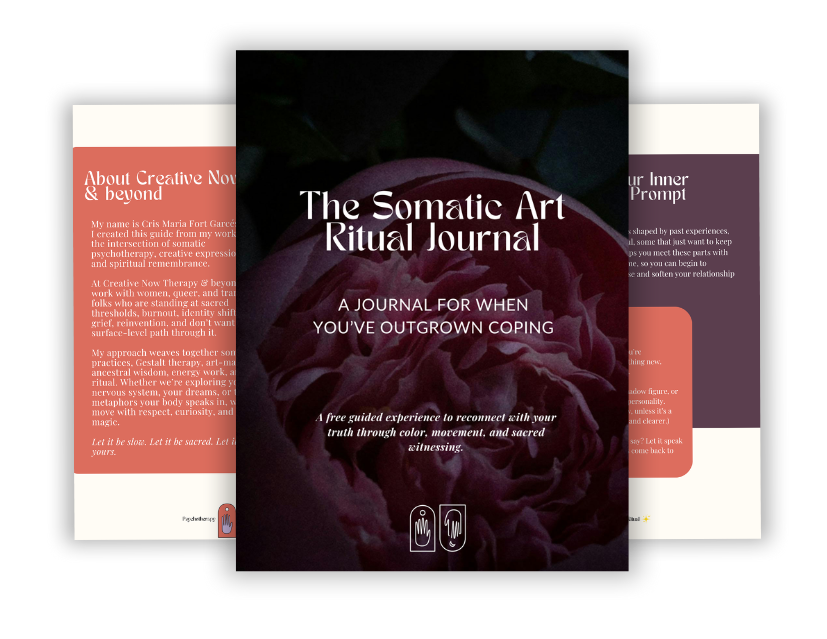
In case you are new here, I am Cristina Maria Fort Garcés, a somatic therapist and energy coach working at the intersection of clinical rigor and mystical depth.
My practice,
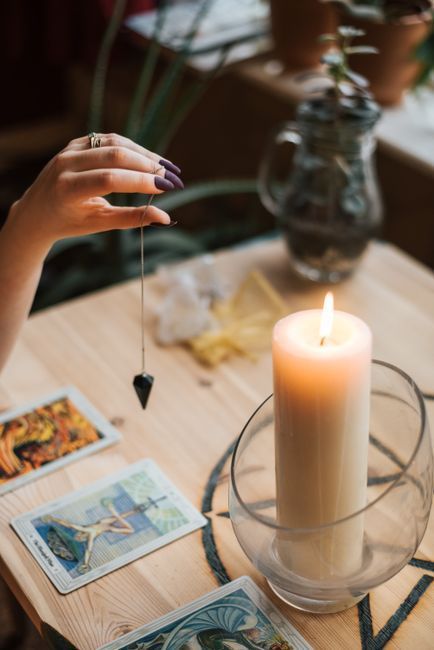
Creative Now Therapy & Beyond, is built for women and queer adults who are spiritually alive and chronically self-abandoning. The ones who have done the therapy, read the books, and still feel stuck in their bodies. I hold space where your Tarot deck and your trauma are equally welcome in the room. If that sounds like what you have been looking for, you may want to explore
somatic therapy for healers and space holders. Not as another self-management tool. As actual integration.

What are somatic exercises?
Somatic exercises are body-based practices that invite you back into contact with physical sensation, intentionally, gently, without forcing anything. Instead of analyzing what is happening, you begin to feel where it lives. The tightness in your throat. The held breath. The shoulders that haven't dropped since 2019.
This matters because stress and trauma are not primarily mental experiences. They are held in the nervous system, in the bracing, the collapse, the chronic vigilance your body learned to call "normal." That tight chest is not a character flaw. It's a pattern your nervous system built to keep you safe.
In the animistic and Andean traditions I work within, the body is not separate from the living world around it. Your nervous system is your personal energy field made physical, the boundary where you meet everything that is not you. What we call dysregulation, the Andean tradition calls an accumulation of hucha, dense energy that builds up through unprocessed experience. It is not bad. It is not broken. It is sacred material asking to be worked with.
Somatic exercises invite that pattern to update. Slowly. Without drama.
How somatic exercises benefit your life
When you work at the level where patterns actually live, the body, things start to shift in ways that insight alone never quite reaches. You stop replaying the meeting at 2am. Your shoulders drop on a random Wednesday and you notice, oh. That's what calm feels like.
Over time, you may find that you react less to stress, sleep through the night, and feel genuinely present in your relationships instead of performing presence while scanning for danger. You stop living in survival mode. Not because you finally found the right mindset, but because your body stopped bracing for an impact that isn't coming anymore.
There is also something that happens beyond the personal. In Andean cosmology, we understand the world as a living field of ayni, reciprocal exchange between all things. When your nervous system begins to regulate, you are not just feeling better. You are coming back into right relationship with the animate world around you. The body that can rest is a body that can receive. And a body that can receive is one that can finally participate in the life that has been trying to meet it.
This is not a quick fix. It is the kind of slow, steady work that actually lasts because it lands in your spine, not just your notes app.
Now that you understand what somatic exercises are and how they can support your life, let's be honest about something: 50 is a lot. If your nervous system just clenched reading that number, that response is actually the whole point.
You don't consume this list. You don't work through it like a to-do. In somatics, we call it titrating. The slow, deliberate descent. You don't jump off the mountain. You descend it carefully, with the right gear, taking stock of where you are at each step. Your body can only integrate what it has been prepared to receive. Feed it one small piece of bread. Let it digest. Then offer another. (I'm a Virgo sun. Virgo rules the digestive tract, the great refiner. This metaphor is not an accident.)
Pick one exercise from this list. Stay with it for a week. Notice what your body says. Not what your mind thinks about it, what your
body says. Then either keep it, swap it for another, or slowly add a second. That's the whole method.

50 somatic exercises for anxiety and trauma
Grounding and safety exercises
- Feel your feet pressing into the floor. Notice the weight, the temperature, the contact
- Sit and notice where your body actually meets the chair. Not where you think it does. Where it does
- Hold a warm mug and let the heat travel up through your palms
- Name 5 things you can see around you, slowly, like you're meeting them for the first time
- Press your hands gently together and feel the resistance
- Lean your back against a wall and let it hold you for once
- Wrap yourself in a blanket and notice the pressure, not just the comfort
- Place one hand on your chest and one on your stomach and just... witness
- Notice the actual weight of your body. You are heavier than you remember
- Slowly scan from head to toe. Not to fix anything. Just to find out what's there
Breath awareness exercises
- Observe your natural breath without trying to change it. This alone is the work
- Let your exhale lengthen just slightly. Not forced. Like a slow release
- Place your hands on your ribs and feel how they actually expand
- Breathe in through the nose, out through the mouth and feel the difference
- Count your breaths from 1 to 10. When you lose count (you will), start again without judgment
- Pause gently after the exhale and rest in that stillness for a moment
- Notice where your breath feels blocked or shallow. Get curious instead of alarmed
- Direct your breath into an area of tension like you are breathing around something stuck
- Let out a long sigh. Audible, unapologetic, animal
- Match your breath to a slow, even rhythm and feel your system orient around it

Movement-based somatic exercises
- Slowly roll your shoulders. Not to release tension, just to feel where it lives
- Stretch your arms overhead and notice what opens
- Gently twist your torso side to side and let the movement find its own pace
- Walk slowly and actually feel each step. This is harder than it sounds
- Shake your hands and arms and let the energy move instead of holding it
- Sway side to side, the way a tree sways. You are still rooted
- Small, slow neck circles. Not to crack anything, just to arrive in your neck
- Push your hands against a surface and notice the pushback
- Rise onto your toes and lower slowly. Feel the ground receive you
- Move in any way that feels natural, without choreographing it first
Nervous system regulation exercises
- Look around the room slowly. This is called orienting, and it signals safety to your system
- Track a slowly moving object with just your eyes. Let your body settle around that focus
- Listen for the most distant sound you can hear. It expands your nervous system's sense of space
- Find one calming object in the room and just rest your gaze on it
- Let your eyes go soft instead of focusing sharply and feel the difference in your jaw, your shoulders
- Hum gently. The vibration travels through the vagus nerve and tells your body to exhale
- Place your tongue on the roof of your mouth and let your jaw soften
- Allow a very slight smile. Not performed. Just a millimeter. Notice if something shifts
- Rest in stillness for a few minutes without needing it to be meditation
- Alternate your attention slowly between your body and your environment. Interior, exterior, interior, exterior
Release and emotional processing exercises
- Let your body shake if it wants to. This is your system completing something
- Press into a pillow or cushion and let your hands push instead of hold
- Write down what you feel and then notice where you feel it in your body before you keep writing
- Make sound. A sigh, a hum, a long exhale with a little voice in it. You don't need a reason
- Allow small, spontaneous movement when an emotion arrives. Your body is trying to say something
- Place your hand on the place where you feel discomfort. Not to fix it, to acknowledge it
- Rock your body gently. This is not regression. This is regulation
- Cry if your body is asking to and stay present while it happens instead of rushing it through
- Notice the smallest moments of relief, even fleeting ones. Train your system to recognize safety
- Stay with a sensation until it shifts on its own. It will. It always does

How to use somatic exercises in daily life
You do not need to do all 50. Honestly, trying to do all 50 would be your nervous system's worst nightmare dressed up as self-improvement.
This is titration. In somatic work, we don't leap into the deep end. We descend slowly, carefully, respecting the pace of the body we're actually working with. Not the body we wish we had. Not the body that meditates at dawn and drops into the void on command. The one that has been in high gear for weeks, months, maybe years and needs a gentle, consistent invitation to come back down.
Start with one practice. Do it for seven days. It doesn't need to feel profound. It doesn't need to feel like anything, actually. Just show up for it. Let your nervous system begin to recognize it as a signal. This is where we slow down. Then, if you want, add a second. Alternate between the two and notice which one your body reaches for. That preference is data. That is your system beginning to know itself.
We don't build regulation through intensity. We build it through repetition. Small, consistent, unremarkable moments of returning. The Virgo in me wants to remind you: refinement is not the same as restriction. It's discernment. Knowing what your system can actually take in and digest, versus what it will just... push back out because you moved too fast.
That is the work. And it is enough.
When to work with a somatic therapist
These exercises are real and they matter. But certain patterns need more than a list. If anxiety has been your baseline for so long that you can't imagine what regulated actually feels like, that's a nervous system that needs more than a breathing exercise.
There is a concept I return to often from my training in Andean mysticism. The idea that what we carry as dense, stuck energy, the hucha of our accumulated pain and self-abandonment, is not a problem to be eliminated. It is the curriculum. It is the most sacred material we have. But working with it directly, in the body, with the right container, requires more than a list of exercises. It requires a guide who will not flinch at what you find.
You may want direct support if:
- Anxiety feels constant, not situational
- You feel disconnected from your body, numb, or unable to sense much at all
- Talk therapy gave you insight but the patterns didn't change
- You are spiritually curious but your practices never quite land. They stay in your head while your body keeps running the old program
- You feel stuck in a loop you can name perfectly but can't seem to move through
Working with a somatic therapist in Kingston, New York means going deeper without overwhelm, held in the actual clinical rigor this work requires, not a weekend workshop version of it.
Your body already knows something is ready to shift. Let's build a path that your nervous system can actually trust.
Book a consultation.

Hello, I’m Cris Maria Fort Garcés
Therapy & Beyond for Spiritual Beings. Clinically trained. Mystically tuned.