Nervous System Regulation in New York: How to Feel Calm in Your Body Again
Disclaimer: This blog is for educational purposes only and does not constitute therapy or replace professional care. If you have a significant trauma history, please consult a licensed professional before practicing these exercises on your own.
Nervous system regulation shapes how you experience your entire life, even if you have never had language for it before. It lives underneath everything. How you respond to stress. How safe you feel in your own skin. How easily you can return to yourself after something knocks you sideways. If your system has been under pressure for a long time, calm can start to feel like something you have to chase rather than something you already carry.
If you have been feeling anxious, overwhelmed, constantly braced for impact, or even flat and far away from yourself, that is not random. These are not character flaws. They are not signs that something is fundamentally broken in you. They are patterns your nervous system developed over time to keep you safe in a world that did not always feel safe. Your body adapted. It learned. And now that same adaptation is exhausting you.
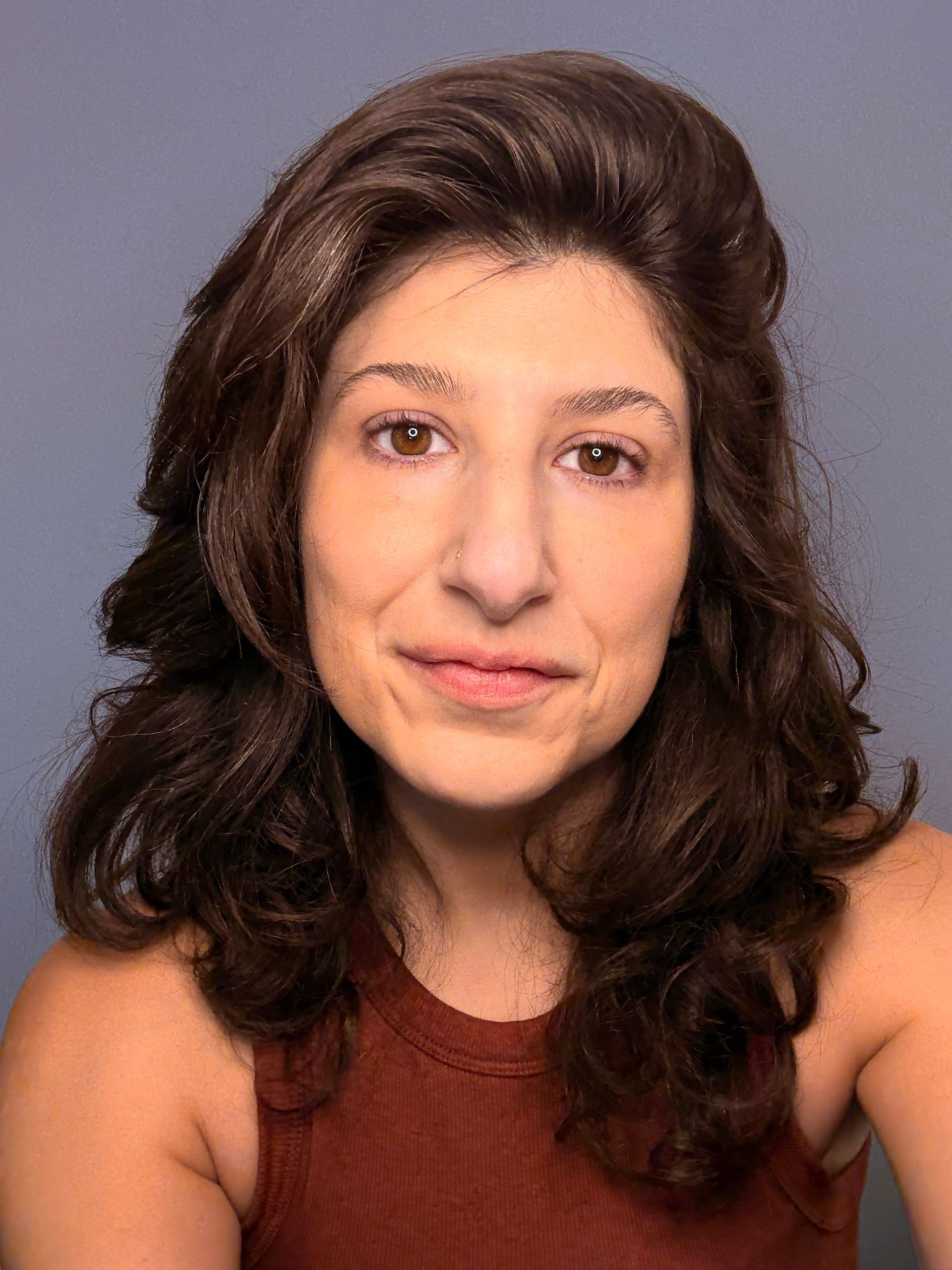
In case you are new here, I am Cristina Maria Fort Garcés, a somatic therapist and energy coach at the intersection of clinical rigor and mystical depth.
My practice,
Creative Now Therapy & Beyond, holds space where your nervous system and your soul are allowed to heal at the same time. I offer somatic psychotherapy and spiritual integration for sensitive women, queer adults, and space holders in New York who are done abandoning themselves to manage everything and everyone else.
What is nervous system regulation?
Nervous system regulation is your body's natural capacity to move between activation and rest without getting stuck at either end. You are designed to feel stress, respond to it, and then return to a baseline where you feel present, grounded, and connected. That rhythm is not a luxury. It is your biology doing exactly what it was built to do.
In the Andean mystical tradition I am trained in, we talk about the poq'po, the personal energy field that surrounds and permeates your body. Your nervous system is its somatic counterpart, the living boundary where you meet the world. When that boundary is healthy, you can take things in and release them. When it is dysregulated, everything becomes too much, or nothing lands at all.
Regulation is not about forcing calm. It is about creating enough felt safety that your body can begin to shift on its own. That is always a gradual process. It happens through small, repeated experiences where your system learns that it does not have to stay in survival mode anymore.
What causes nervous system dysregulation?
Your nervous system is shaped by your experiences, not your discipline or your willpower. It learns through repetition, especially during moments of prolonged stress, fear, or overwhelm. If your body had to stay alert for a long time, it adapted by making that alertness feel like baseline. That is not a failure. That is an extraordinarily intelligent survival response.
In somatic work, we call this accumulated density hucha, a concept from Andean mysticism that describes the heavy, stuck energy that builds up in the body through our encounters with pain, threat, and self-abandonment. Hucha is not bad energy. It is sacred material. It is the precise location of what wants to be known and worked with. The tightness in your chest is not the enemy. It is the curriculum.
Dysregulation can come from chronic stress, unresolved trauma, emotional suppression, lack of rest, or simply living in a city like New York where your system is constantly processing noise, movement, and stimulation without enough space to fully exhale. The problem is not that your body reacts. The problem is that it may not yet know how to come back.
Signs your nervous system needs support
Many people are living with nervous system dysregulation without realizing it, because it has simply become their normal. You might feel like you are always on, like there is a background hum of tension that never fully turns off even when nothing urgent is happening. You lie awake replaying conversations. Your shoulders hit your ears the moment you open your laptop. You feel wired and exhausted at the same time.
You might also notice that your emotional responses feel hard to modulate. Small things hit harder than they should. Or the opposite, you feel numb, distant, like you are watching your life from behind glass instead of actually living it. Both of these are your nervous system doing its job. It is protecting you. It just does not know the threat has passed.
These are not personality traits. They are signals. And learning to listen to them, with curiosity instead of criticism, is where the work actually begins.

How to regulate your nervous system
Here is what most people get wrong about this. Regulation is not another thing to optimize. It is not a morning routine to perfect or a technique to master. It is a relationship with your body that you build slowly, through presence, not performance.
It can look like feeling your feet on the floor. Letting your breath slow without forcing it. Letting your eyes move around the room instead of fixing on a screen. In the Andean tradition, this kind of deliberate orienting to your environment is actually a practice of reestablishing ayni, the principle of reciprocal exchange with the living world around you. When you orient yourself to the room, to the light, to the sound of distant traffic, you are not just calming your nervous system. You are remembering that you are embedded in a living, responsive world that is in relationship with you.
What matters most is consistency over intensity. One moment of regulation will not change your baseline, but repeated small moments will. Your body learns through repetition what the mind already understands.
Nervous system regulation techniques
There is no single technique that works for everyone, and that is worth saying clearly. Your nervous system is shaped by your specific history, your environment, and your capacity. What feels regulating to one person can feel activating to another. The most important thing is learning to track what your body is actually telling you, not what you think it should need.
The most effective techniques are almost always simple and body-based. Somatic awareness, gentle movement, breath without force, orienting to your environment, and working with sensation directly. These practices do not push your system. They meet it where it is. They speak to it in the language it actually understands.
For concrete tools you can begin using today, you can explore our full guide on somatic exercises for anxiety and trauma, where I walk through 50 practices in a way that is accessible, grounded, and designed for the nervous system that has been carrying a lot for a long time.
The goal is not mastery. It is contact. A relationship with your own body where you can begin to notice what it needs and respond without judgment.

The connection between somatic therapy and nervous system regulation
Somatic therapy works directly at the level where these patterns are stored, which is why it can reach what talk therapy alone often cannot. We begin with sensation. Where are you feeling that in your body? What color does it have? What texture? We give it language, and then sometimes a symbol or an image arrives, and that is when the esoteric tools enter the room.
This is not separate from the clinical work. It is the clinical work. I have watched a tarot card open a door that years of conversation could not find. I have watched a client feel into the somatic signature of a Saturn transit and suddenly understand why their body has been bracing for three months. The symbol does not bypass the nervous system. It gives the nervous system something it can approach without flinching.
This integrated approach creates deeper and more durable change because it works at multiple levels simultaneously: the energetic, the somatic, and the lived experience. It is not about managing symptoms. It is about widening the landscape around the wound until the wound finds its actual size, and the world becomes bigger than the pattern.
When to seek support
If your nervous system has been asking for something deeper than another coping strategy, you do not have to figure this out alone.
I offer somatic psychotherapy in Kingston, New York that holds both the clinical and the mystical, supporting your nervous system and your inner process in a way that is grounded, sustainable, and genuinely integrative. This is not self-improvement. It is soul retrieval.
Your body already knows something is ready to shift.
Book a consultation and let's find out what it has been waiting to say.

Hello, I’m Cris Maria Fort Garcés
Therapy & Beyond for Spiritual Beings. Clinically trained. Mystically tuned.