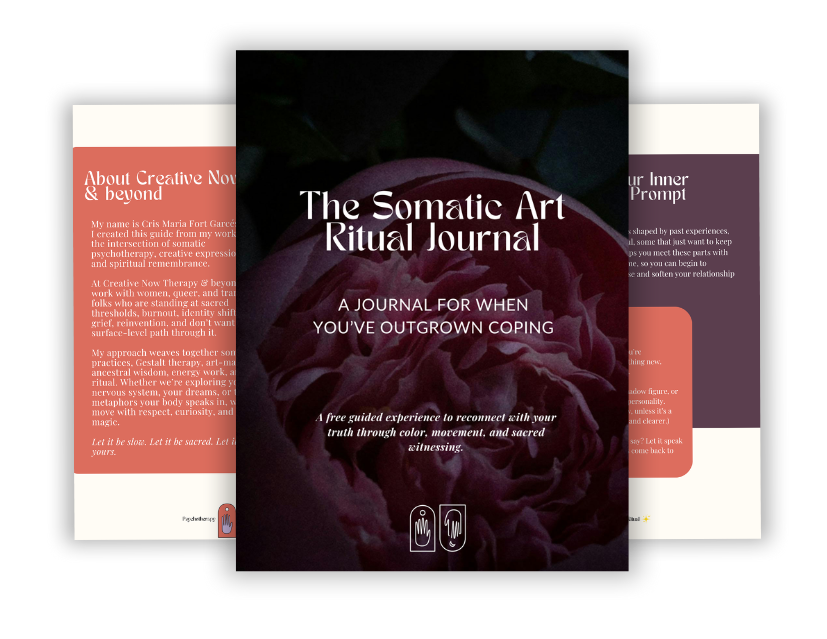

Shadow Work 101: 65 Journal Prompts for Deep Healing and Self Awareness
Shadow work is the process of exploring the parts of yourself that you have learned to hide, suppress, or disconnect from over time.
These parts were not created randomly. They were shaped in moments where being fully yourself cost you something. Love. Safety. Belonging. Approval from someone whose approval felt like survival. Over time, those parts move underground. But they do not disappear. They keep running, quietly, in the background of every decision you make, every relationship you navigate, every moment you go to say the real thing and then don't.
Maybe you recognize this. The version of yourself you perform at work, at family dinners, in the text you rewrite six times before sending. The spiritual interests you hide in a tab you close when someone walks by. The anger you swallow so smoothly you have almost convinced yourself it was never there. That is not a character flaw. That is adaptation. Brilliant, exhausting, expensive adaptation.
Shadow work is not about fixing yourself. It is about becoming honest enough to see what has been pushed away, so it can be understood, integrated, and no longer run your life from the basement.
In case you are new here, I am Cristina Maria Fort Garcés, and I support individuals through somatic psychotherapy and energy coaching, blending body-based healing with spiritual tools in a way that feels grounded and real. If you want to stop performing healing and start becoming whole, shadow work therapy will help you integrate the parts of you that you were taught to hide.
What is shadow work?
Shadow work is the process of bringing awareness to the parts of yourself you avoid, reject, or deny.
These can include the obvious ones: anger, jealousy, control, insecurity. But they also include parts of you that hold genuine power, desire, and truth that you were never given permission to express. The part of you that wants to take up more space. The part that knows exactly what it wants and has been told, directly or indirectly, that wanting things that clearly is dangerous. The part that is furious. The part that is wildly creative and hides it under competence.
In Jungian psychology, the shadow is not the evil part of you. It is the unlived part. The archetypal potential that went underground because the environment could not hold it. But here is something that often gets missed in how shadow work is taught: the shadow is not only a personal phenomenon. It is also a relational one. A communal one. An ecological one.
Josh Schrei, host of The Emerald podcast, speaks to this directly. For most of human history, the inner life was never understood as something separate from the world around it. Animism, which characterized the vast majority of human experience across cultures, was not a belief system. It was a lived reality, felt in the body, expressed in community, and held in relationship with the land. When we reduce shadow work to a private psychological project, we lose something essential. We forget that what lives in our depths is also in relationship with something larger than our own interior. The grief that cannot be named. The rage that has nowhere to go. The wildness that was domesticated. These do not only belong to us. They belong to the field.
If you want to understand how these patterns also live in your body, you can explore
nervous system regulation, because many of these reactions are not just emotional. They are physical. The shadow does not only live in your psychology. It lives in the tightening of your jaw and the shallowing of your breath.

Why does shadow work matter?
If you do not look at your shadow, it will still show up.
It shows up in your triggers, your overreactions, the relationships where you keep playing the same role, the dreams that won't leave you alone. It shows up when someone expresses something freely that you have spent years suppressing and you feel a complicated mix of admiration and rage and you do not fully understand why. That complexity is the shadow asking to be known.
And it shows up in the world. The parts of ourselves we most forcefully deny tend to become the parts we most forcefully project outward, onto other people, onto communities, onto the land itself. Shadow work, when it is done honestly, is not a solitary act of self-improvement. It is a way of becoming less dangerous to the people and the world around you. It is a way of taking your energy back from the patterns that have been running it and returning it to actual life.
In Tarot, every card has a shadow expression. The High Priestess turned so far inward she becomes inaccessible. The Empress whose nurturing tips into control. The work of reading the cards honestly is the same work as shadow integration: can you see all of it, without collapsing into shame? Shadow work is not about becoming a better version of yourself. It is about becoming a more honest version. And honest, in my experience, is always more interesting than better.
If you want to understand how these patterns are processed beyond the mind, you can explore somatic therapy benefits and how the body plays a role in integration.
How to start?
Here is something that most shadow work guides will not tell you: the places you are being asked to enter are genuinely dark. Shamans and depth practitioners spend years, sometimes decades, learning how to navigate these territories safely, how to descend without getting lost, how to work with what lives in the depths without being overwhelmed by it. That is not said to frighten you. It is said to invite real respect for the work.
This is not a list of prompts to power through in one sitting. It is not a productivity exercise. Shadow work entered too fast, without adequate support or grounding, can destabilize rather than integrate. Your defenses exist for a reason. They are not obstacles to the healing. They are part of the intelligence of your system, protecting something that matters.
You approach them with care, the way you would approach a frightened animal, not by rushing in but by making yourself safe enough to be approached.
Start with one prompt. Stay with it. If something feels intense, come back to your body. You can use somatic exercises for anxiety and trauma to stay grounded while exploring. If emotions feel stuck and need a way to move, you can explore somatic therapy. And if you sense that what you are touching is bigger than a journal prompt can hold, that is important information. That is your system asking for a real container, not a solo dive.
This work is not about pushing. It is about being honest without overwhelming yourself. One question. One honest answer. That is enough.

Shadow work journal prompts for self-awareness
Identity
- What part of me am I actively pretending does not exist?
- When do I feel like I am performing instead of being real?
- What do I need others to believe about me so I can feel safe?
- What part of me would people reject if they saw it fully?
- Where in my life am I being dishonest with myself?
- What emotion do I avoid the fastest and why?
- What version of myself am I trying to maintain at all costs?
- What am I afraid would happen if I stopped being this version?
- What truth about myself feels uncomfortable to admit?
- What part of me feels too much or not acceptable?
Triggers and patterns
- What specifically triggered me and what did it make me feel about myself?
- What did I make that situation mean about me?
- What am I actually reacting to beneath the surface?
- Where have I felt this exact feeling before?
- What does my reaction protect me from feeling?
- What am I avoiding by focusing on the other person?
- What pattern keeps repeating that I say I want to change but do not?
- What part of me benefits from staying in this pattern?
- What would I lose if I actually changed this?
- Am I more attached to being right or being honest?
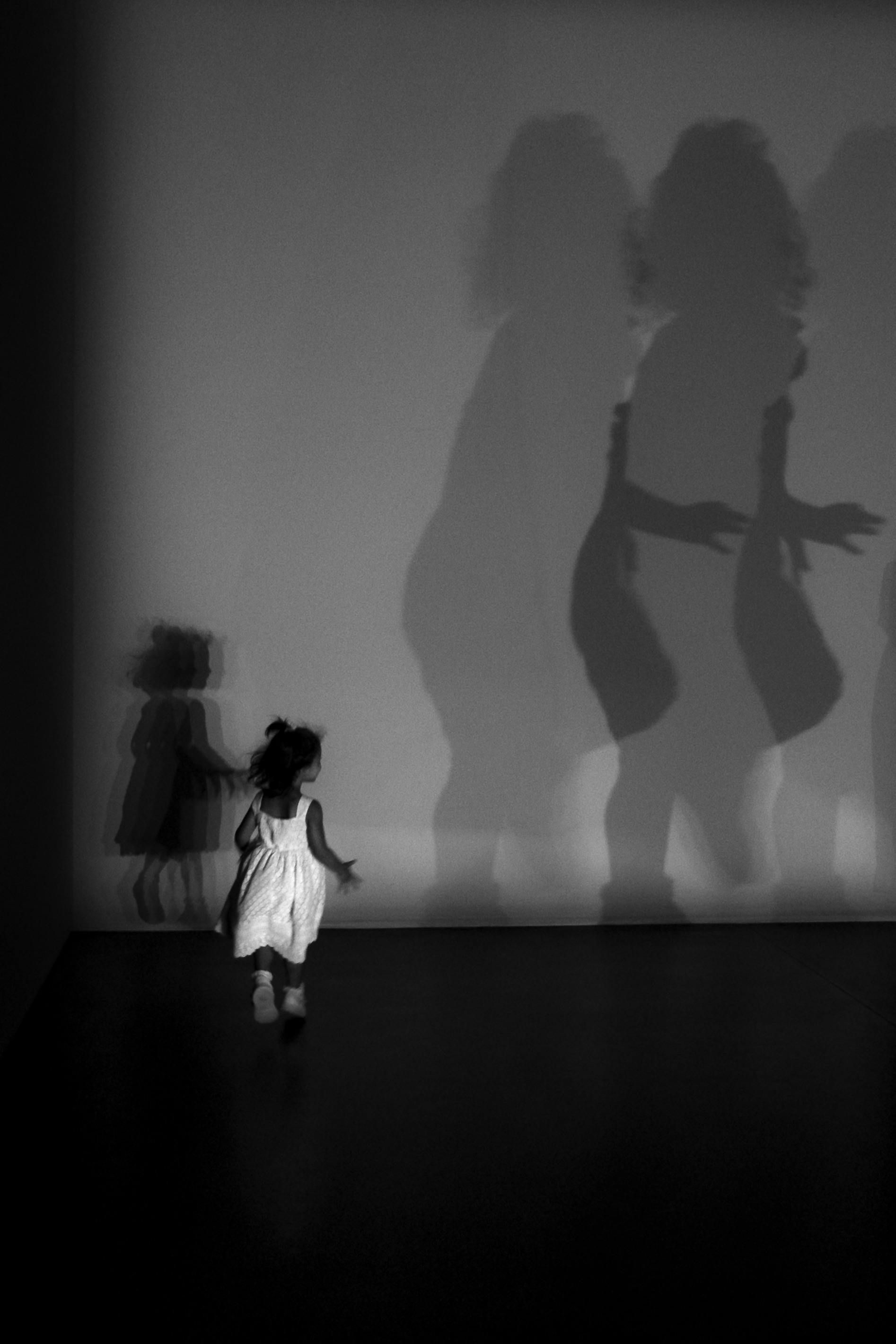
Inner child and past
- What did I have to become to feel loved or accepted?
- What part of me was never allowed to grow up?
- What emotion was unsafe to express in my environment?
- What did I learn about myself that I still believe today?
- What did I need that I never received?
- What do I still feel angry about but do not admit?
- What am I still waiting for from the past?
- What part of me still feels stuck in that time?
- If I stop minimizing it, what actually hurt me?
- What do I need to grieve that I have not allowed myself to feel?
Shadow work prompts for relationships and projections
Sometimes the parts you avoid the most show up through other people. This is not a flaw in how you relate. It is a gift, if you are willing to use it. The things that most activate you in others are almost always pointing back toward something in yourself that has not yet been integrated.
But it is also worth saying this: projection is not only interpersonal. Sometimes what we are projecting is older and larger than any single relationship. Sometimes the rage that comes up when someone expresses their needs freely is not just about your family of origin. It is about everything that was systematically required to disappear. The culture. The ancestral lineage. The collective shadow of entire communities. When we do shadow work in ceremony, in relationship with myth, or in the presence of the land, we start to feel the difference between what is personally ours and what belongs to a much larger story. Both matter. Both deserve attention.
The prompts below are structured as sentence completions. Write the first thing that comes. Do not edit for kindness.
I judge you because
- I judge you for being _ because I am afraid I am _
- I judge you for expressing _ because I suppress _
- I judge you for needing _ because I never allowed myself to need _
- I judge you for being too _ because I fear being seen that way
- I judge you for not being _ because I feel I am not _
I need to hate you so I can
- I need to hate you so I do not have to feel _
- I need to hate you so I can avoid seeing _ in myself
- I need to hate you so I can stay in control of _
- I need to hate you so I do not have to admit _
- I need to hate you so I can justify _
In this friendship, what am I actually reacting to
- What about this person makes me uncomfortable and why?
- What do they express that I do not allow in myself?
- What part of them triggers something unresolved in me?
- What am I expecting from them that I do not give myself?
- What am I avoiding by focusing on their behavior?
What I do not want to admit about myself
- A part of me is actually like them in this way: _
- I secretly want to be able to _ but I stop myself
- I am afraid that if I allow myself to be _ then _
- I reject _ in others because I cannot accept it in myself
- If I am honest, I also _ but I hide it
Rewriting the projection
- If I stop blaming them, what do I feel instead?
- What does this reaction protect me from?
- What part of me needs compassion instead of judgment?
- What am I not ready to take responsibility for?
- What truth am I avoiding right now?

Power, fear, and expression
These prompts go somewhere most shadow work resources skip entirely. Not the wounds underneath, but the power. The aliveness that got suppressed not because it was damaged but because it was too much, too bright, too real for the container it was in.
In shamanic traditions, this is sometimes called soul retrieval, the recovery of the vital parts of self that went into hiding during overwhelming experiences. A journey might reveal an animal that carries the quality you abandoned at age nine. A myth might hold the archetype of the part of you that was told to be quiet and has been quiet ever since. These prompts are a written doorway into that territory. Enter slowly.
- Where do I hold back even when I want to speak or act?
- What part of me feels powerful but unsafe to express?
- What am I afraid will happen if I am fully seen?
- What do I fear about being honest?
- What part of me wants to take up more space but does not?
Integration and acceptance
Shadow work without integration is just excavation. You dig it up, look at it, feel terrible, and put it back. Integration is the part where you bring what you found into relationship with the rest of yourself and with the world around you. Not performing acceptance. Not bypassing the difficulty. Actually sitting with it until it becomes familiar.
And then taking it outside. Literally. Sometimes integration happens in community. In ceremony. In the presence of a tree you return to. In a conversation where you finally say the true thing and the world does not end. The shadow does not only integrate inward. It integrates outward, back into relationship, back into the living field it was always part of. That is not mystical decoration. That is how humans have always done this work, together, in the presence of something larger than the individual psyche.
- What part of me needs acceptance right now?
- What would it feel like to allow all parts of me to exist?
- What am I learning about myself that I used to avoid?
- What feels softer or clearer now?
- What feels more true even if it is uncomfortable?

How to use these prompts
Do not try to answer everything. That would defeat the purpose entirely and is also very on brand for the part of you that turns healing into a productivity project.
Pick one question. Stay with it longer than is comfortable. Let the answer be honest, not polished. If you notice your body tightening as you write, that is information. If your hand wants to move faster, that is also information. The body knows where the charge is, and it knows when you are circling instead of landing.
If something feels intense, come back to your body. Understanding nervous system regulation can help you stay grounded while doing this work. Shadow work and somatic work belong together for exactly this reason. The journal opens the door. The body tells you whether you are actually walking through it or writing around it.
Are you ready to meet yourself more honestly?
If something in this stirred something in you, that matters. Not as a concept. As a sensation. As the thing that tightened or opened or went very quiet while you were reading.

Hello, I’m Cris Maria Fort Garcés
Therapy & Beyond for Spiritual Beings. Clinically trained. Mystically tuned.