Therapy for burnout: a somatic approach to recovering when you're running on empty
You can be the one everyone leans on and still wake up feeling like there is nothing left in the well. You hold your clients' pain like holy water. And somewhere along the way, you lost the bucket for your own.
If you're looking into therapy for burnout, you've probably already heard the standard advice. Set boundaries. Take a vacation. Breathe. What it leaves out is how burnout actually lives in you: the jaw you can't unclench, the Sunday dread that now starts on Friday afternoon, the way rest no longer feels like rest. You may have done everything "right" and still feel hollow.
That is not a personal failure. It's a sign the exhaustion has moved deeper than your calendar can reach. In this post, I'll walk you through what burnout does to your body, why understanding it isn't the same as healing it, what somatic sessions with me actually look like, and the phases most people move through on the way back to themselves.
In case you're new here, I'm Cristina Maria Fort Garcés. I offer somatic psychotherapy for burnt out healers and creatives for therapists, facilitators, artists, and deeply sensitive people who have already "done the work" and still feel the ache. My practice weaves body-based therapy, creative expression, and a little ritual when it speaks to you. I'm trauma-trained, slightly witchy, and very honest, and I believe your exhaustion is carrying a message worth hearing.
What does burnout feel like in your body?
Burnout usually gets described in emotional language: cynicism, detachment, dread. But most of the people who find their way to my practice notice it physically first. Afternoon tension headaches. A stomach that won't settle. Sleep that comes hard and leaves early, or ten hours of sleep that doesn't touch the fatigue. Getting sick the moment you finally take time off, as if your immune system had been waiting for permission.
From overdrive to shutdown
Underneath these symptoms is a nervous system that has been running in survival mode for too long. When stress is chronic, your body stays braced for a threat that never quite passes. Muscles hum with readiness while digestion and repair wait in line. And a body that can't stand down eventually does the only thing it has left. It shuts down.
That's the flatness so many people describe to me. Not sad, exactly. Just gone. Watching your own life from somewhere slightly behind your eyes.
Quiet signs your body is running on empty
The shift from overdrive into shutdown is often subtle. You might notice:
- Music that used to move you now lands flat.
- Food loses its taste, or you forget to eat until you're shaky.
- You crave scrolling more than connection.
- You hold your breath while reading emails.
- You feel tired and wired at the same time.
- Your tarot deck, your journal, your candles, the practices that once fed you, now sit untouched.
These aren't character flaws. They're your body's honest report on what it has been carrying.
Why space-holders get blindsided
If you hold space for a living, or simply by temperament, burnout can be especially disorienting. You know exactly how to stay grounded for everyone else. You are always the grounded one, and yet inside you feel like you're floating. You overthink, overfunction, overexplain, without realizing the real problem is that you can't feel your body anymore. You haven't lost your skill. You've just lost the thread back to yourself.
What can burnout be mistaken for?
Burnout overlaps with several other experiences, which is part of why it so often goes unaddressed. It can look like depression, anxiety, chronic fatigue, hormonal shifts, or simply being "bad at self-care." Many people spend months trying to fix the wrong thing.
Burnout or depression?
This distinction matters most. Burnout tends to be tied to a specific context, usually work or caregiving, and it often lifts a little when you step away from that context. Depression is more pervasive. It colors everything, including the parts of life that used to bring joy outside of work. The two can also live side by side. In our early sessions, I'll get curious with you about what's what, and if your body is sending physical signals, it's wise to have your medical provider look at those too so nothing gets missed.
Burnout as "proof" you're too much
There's another thing burnout gets mistaken for, especially by sensitive people: evidence that you are too much, or not enough. You are neither. Your sensitivity isn't a flaw. It's your compass. You're a finely tuned instrument that has been played for years without rest.

Why doesn't talk therapy alone always heal burnout?
Talk therapy can genuinely help with burnout. It can show you the patterns that got you here: the people pleasing, the perfectionism, the family story that taught you your worth was measured in output. You were the responsible one, the fixer, the good daughter, the healer.
Insight lives in your head, burnout lives in your body
But here's what I hear again and again from people who come to me after years of talk therapy: "I understand exactly why I'm burnt out. I just can't feel any different." Insight lives in the thinking brain. Burnout lives in the tissues. As Bessel van der Kolk put it, the body keeps the score, and you can't think your way out of a nervous system that is stuck in survival.
When healing becomes another job
For burnt out helpers, analyzing your way to recovery can quietly become another form of overworking. Another project. Another thing to get right. Somatic therapy offers a different doorway. Instead of only asking why you feel this way, we also ask where you feel it and what it needs. That shift, from explaining to sensing, is often where real change begins. You don't need another method. You need a remembering.
What does somatic therapy for burnout actually involve?
Somatic therapy treats your body as an active partner in healing. We still talk, plenty. But we keep returning to the felt sense: the sensations, impulses, and images that rise in your body as you speak. If you've never tried this kind of work, here's what working with a somatic therapist on burnout can look like in my office.
What happens in the first few sessions?
Early sessions are about safety and pacing. We'll talk about your history with burnout, what your days actually look like, and where you notice stress landing in your body. I'll be just as curious about your resources: the places, people, practices, and memories that still bring even a flicker of ease. Maybe the river at dusk, or your dog's weight against your leg. We'll practice coming back to those, a process called resourcing, so your body has somewhere soft to land.
For a depleted system, the first goal isn't to dig into anything. It's to let your body be with someone who isn't asking it to perform.
What does a typical somatic session feel like?
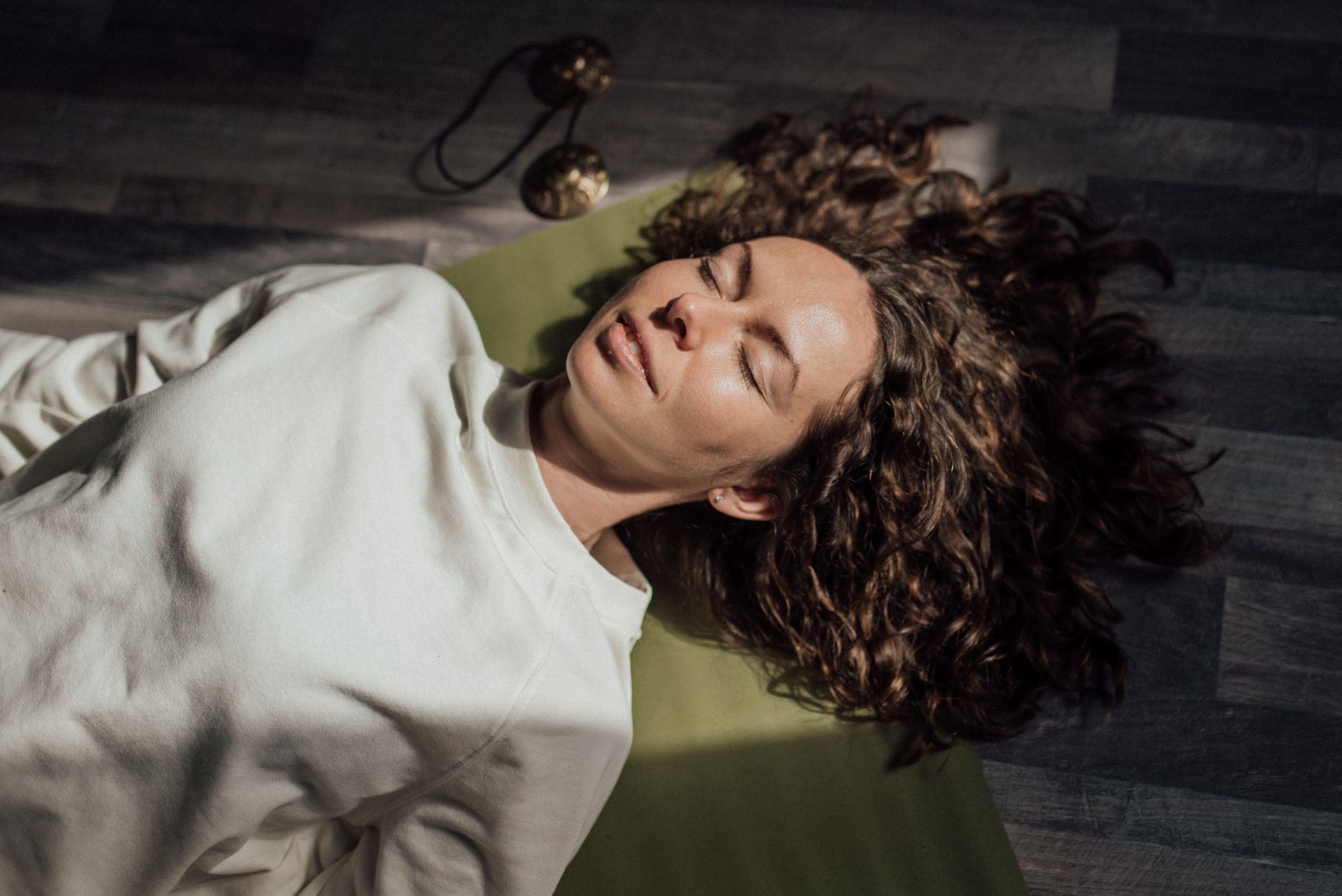
A session often begins with simply arriving. I might invite you to orient to the room: let your eyes wander, notice the light on the wall, feel your feet on the floor, track your breath without trying to fix it. Then you start talking about the week, and I might slow you down mid-sentence. "Can we pause right there? What's happening in your chest as you say that?" Maybe a fist. Maybe a hollow. Maybe nothing, which is also information.
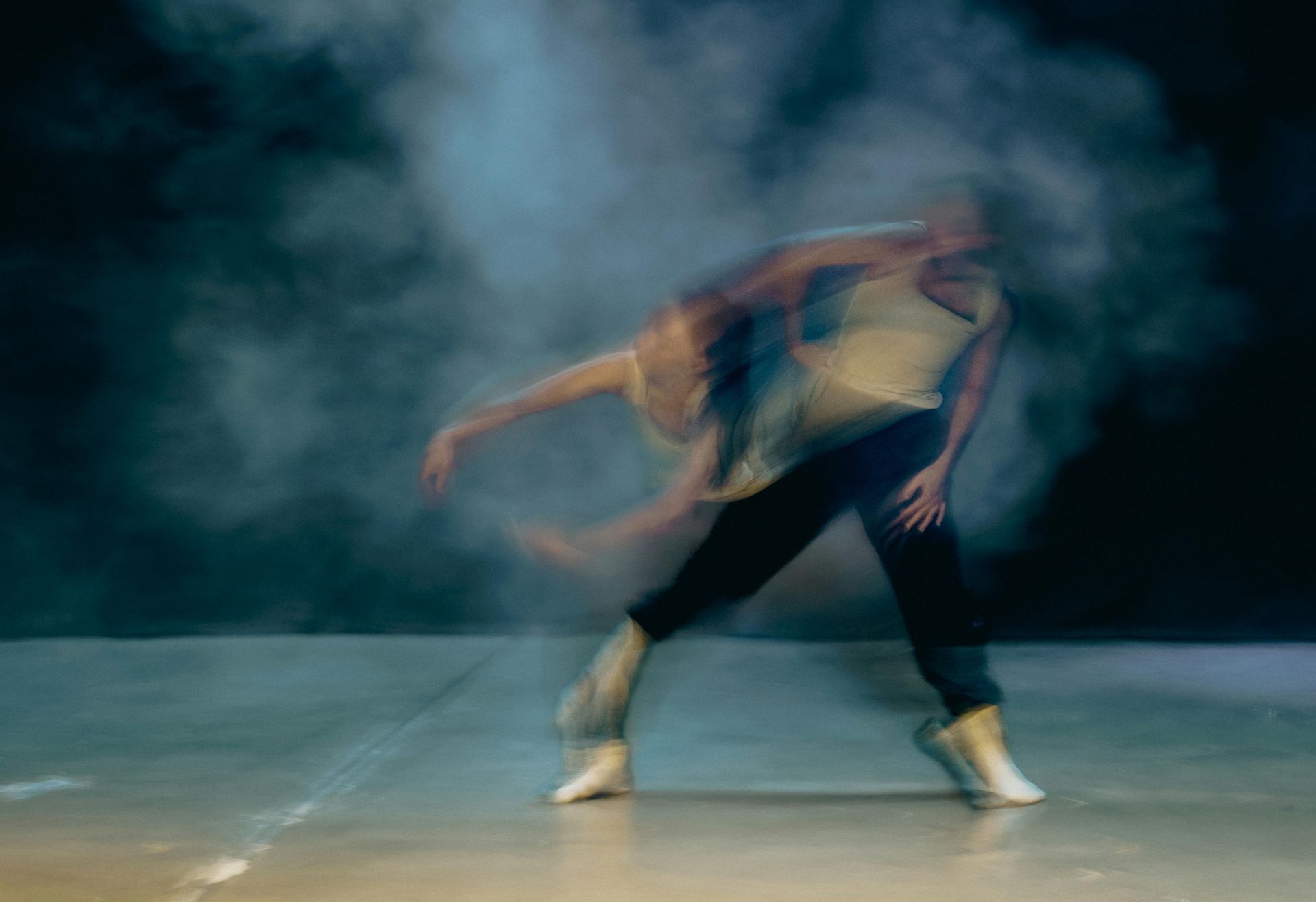
Sometimes a gesture wants to complete itself: pushing away, curling in, reaching out. Sometimes grief that has been waiting patiently behind all the busyness finally gets a turn. We move between the hard sensation and a place in your body that feels more okay, back and forth, a rhythm called pendulation. And we go slowly, in small sips, a practice called titration, so your system can digest one piece at a time instead of flooding. My work is Hakomi-informed, which means mindfulness and loving presence are the ground we stand on.
Many people are surprised by how gentle this is. Burnout recovery doesn't need more intensity. It needs a different quality of attention. If you're curious what this kind of release looks like in practice, my guide to step-by-step trauma release exercises walks through orienting, pendulation, and a few others you can try at home.
How do creativity and ritual fit into burnout therapy?
For burnt out helpers and creatives, words often have become work. That's why I invite other languages into the room. You might draw the sensation in your shoulders, shape the tightness in your throat out of clay, or choose a color for the exhaustion and let it spill across the page. We might set up a Gestalt-style dialogue, giving a voice to the part of you that refuses to stop working, and letting it finally say what it's afraid would happen if you rested.
Ritual gives shape to transitions our culture rarely honors, like leaving a role, a pace, or an identity that is no longer sustainable. If it speaks to you, we might light a candle for the version of you who carried everything, or build a small altar to mark what's ending. Some clients also want to explore energy and subtle body work alongside this; my piece on energy healing techniques explains how I weave it in. None of this replaces clinical work. It deepens it, and it tends to bring back the thing burnout steals first: a sense of aliveness and play.
What are the stages of burnout recovery?
Recovery has its own rhythm, and it's rarely a straight line. Your healing is not linear. It's lunar. It waxes and wanes, and a hard week doesn't mean you've gone backward. Still, most people I work with move through three broad phases, which I think of as the unraveling, the remembrance, and the return.
What happens when you first stop running?
The first phase is the unraveling, which is really stabilization. When the pressure eases even slightly, many people feel worse before they feel better. The adrenaline that kept you upright drops, and the exhaustion underneath finally surfaces. You might sleep more, cry in the cereal aisle, or feel strangely empty. This is your body beginning to stand down. In our sessions, we focus on building regulation and resources so this phase feels like rest rather than collapse. If you'd like practical support between sessions, my guide to nervous system regulation and feeling calm in your body again offers gentle places to start.
What happens as feeling returns?
The second phase is the remembrance, the thaw. As your nervous system gains capacity, sensation and emotion come back online. This is often the most tender part. Anger may show up about how long you've been overextended. Grief may come for the years you spent running on empty, or for the version of yourself who believed she had to earn rest. In somatic work, we let these waves move through with support, so they can complete rather than circle. Grief, here, is a portal back to yourself. So is longing.
What does rebuilding look like?
The third phase is the return, or integration. This is where new choices begin to feel possible in your body, not just in theory. Boundaries stop feeling like a performance and start feeling like a natural edge. You notice fatigue earlier and respond sooner. Integration is initiation, and it takes time. But it's also where people tell me they feel like themselves again, often more than they ever have.
How do you know you're recovering from burnout?
Recovery tends to announce itself quietly.
Signs in your daily life
- You wake up and the dread isn't waiting at the foot of the bed.
- You laugh at something and realize your whole body laughed with you.
- A bad day at work stays a bad day instead of becoming a bad week.
- Your curiosity comes back, about books, about people, about your own inner life.
- You say no without a three paragraph explanation attached.
Signs in your body
In the body, recovery looks like more range. You can get activated and settle again. Your breath drops lower on its own. Pleasure becomes available in small, ordinary moments: warm tea, a walk along the Hudson, sunlight on the kitchen floor, pulling a tarot card before bed just because you want to. You might want to dance in the kitchen, or cry and then rest. That's a body that can feel again.
How long does it take?
There's no universal answer. Some people feel meaningful shifts within a few months of consistent somatic work. Deep, long-standing burnout can take a year or more to fully move through. But recovery isn't a waiting room. Every phase brings real relief, and you don't have to be "done" to start living differently.
What if therapy for burnout could teach your body it's finally safe to rest?
You've spent so long holding everything together that falling apart might feel like the only option left. I want to offer another possibility. You're not falling apart. You're becoming. Burnout isn't proof that you are weak or too sensitive. It's your body's wisdom refusing to keep going on empty, and it deserves to be met with care rather than another productivity plan.
As one client put it, "She didn't save me. She showed me how to reclaim myself." That's the work. I help therapists, healers, creatives, and sensitive souls recover from burnout through somatic psychotherapy, creative expression, and gentle ritual. Together we'll slow down enough for your body to be heard and rebuild a life that has room for you in it. Nothing about you is too much here.
I offer somatic therapy for burnout in Kingston, NY, and I also welcome people traveling from the Newburgh area and clients in Troy, along with folks throughout the Hudson Valley.
About the author
Hi, I’m Cristina Maria Fort Garcés, LCAT, ATR-BC, CPC, a psychotherapist and coach. I offer Somatic Psychotherapy in New York State and Energy Coaching worldwide for women and queer adults ready for healing that listens to the body and the unseen.
Get in Touch with Me
Hello, I’m Cristina Maria Fort Garcés, LCAT, ATR-BC, CPC
Licensed creative arts therapist and somatic psychotherapist in New York State. Energy coach for clients worldwide.